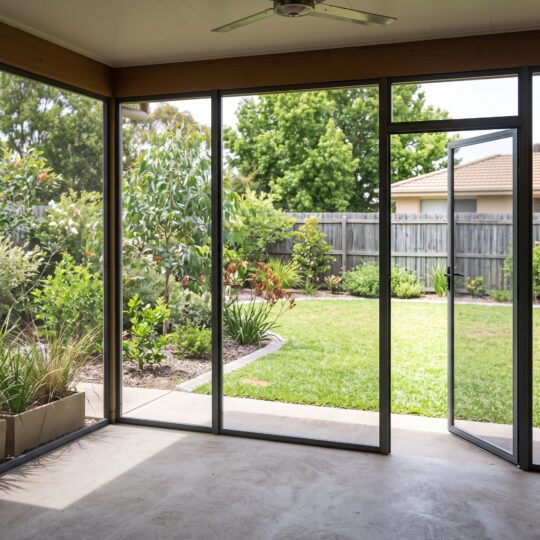
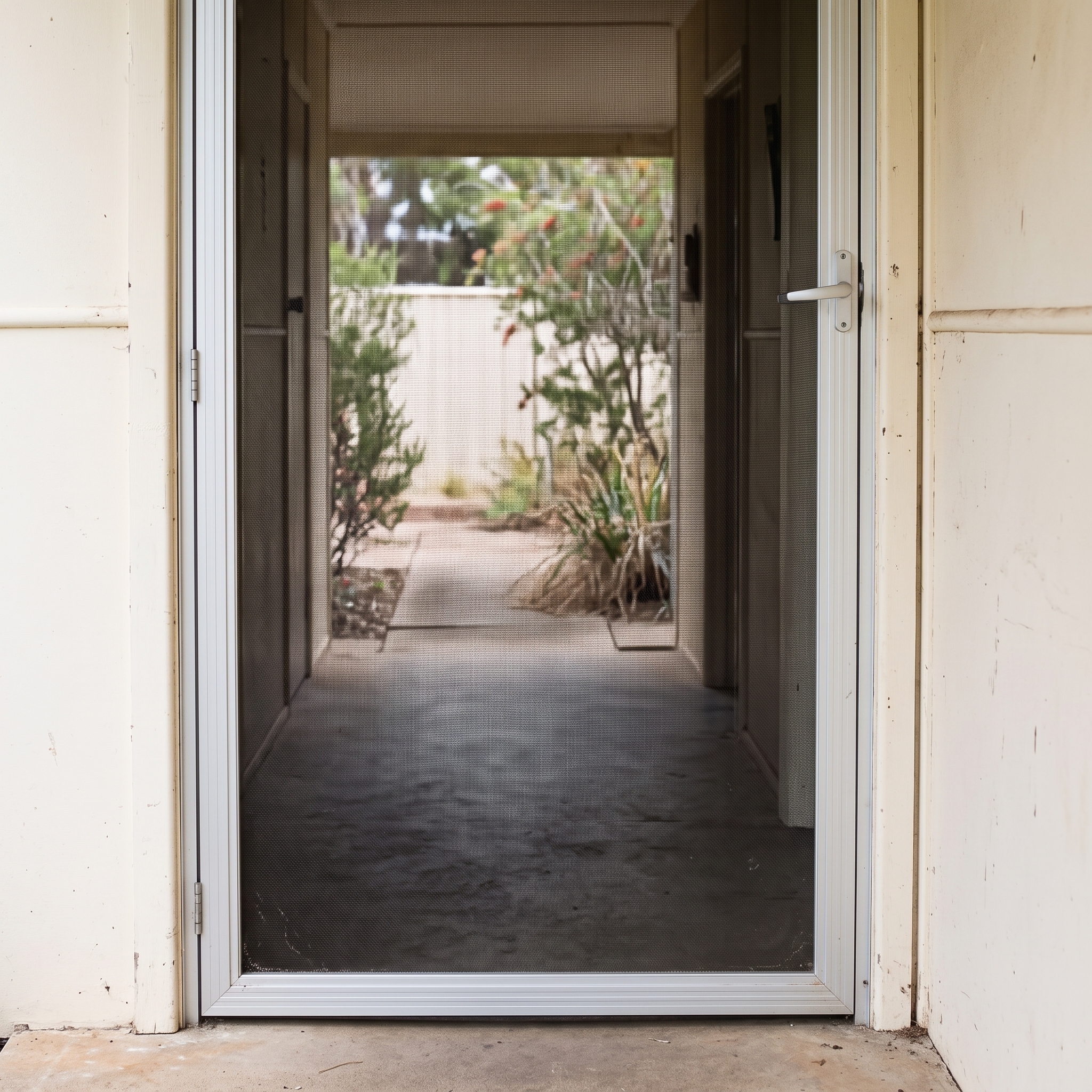
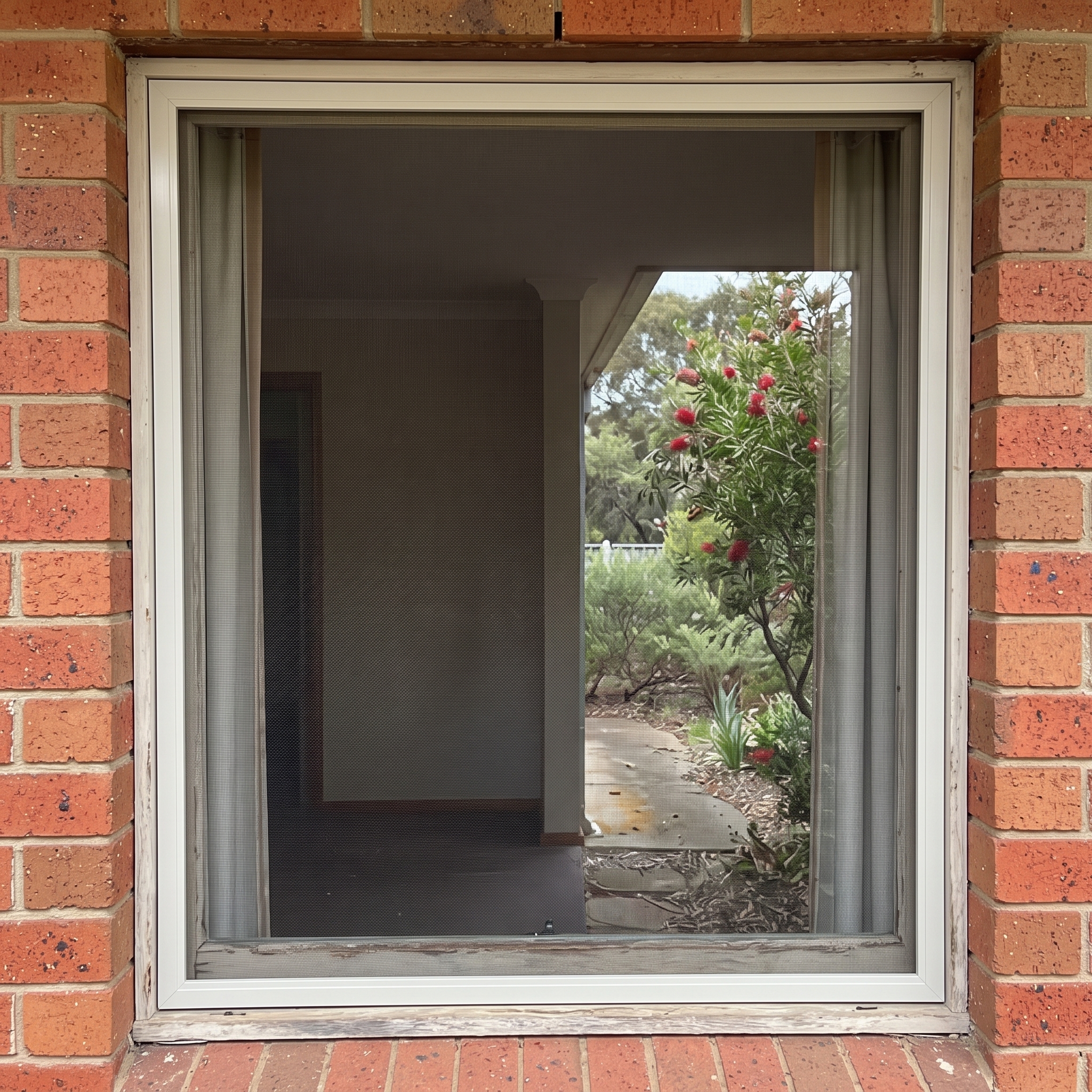
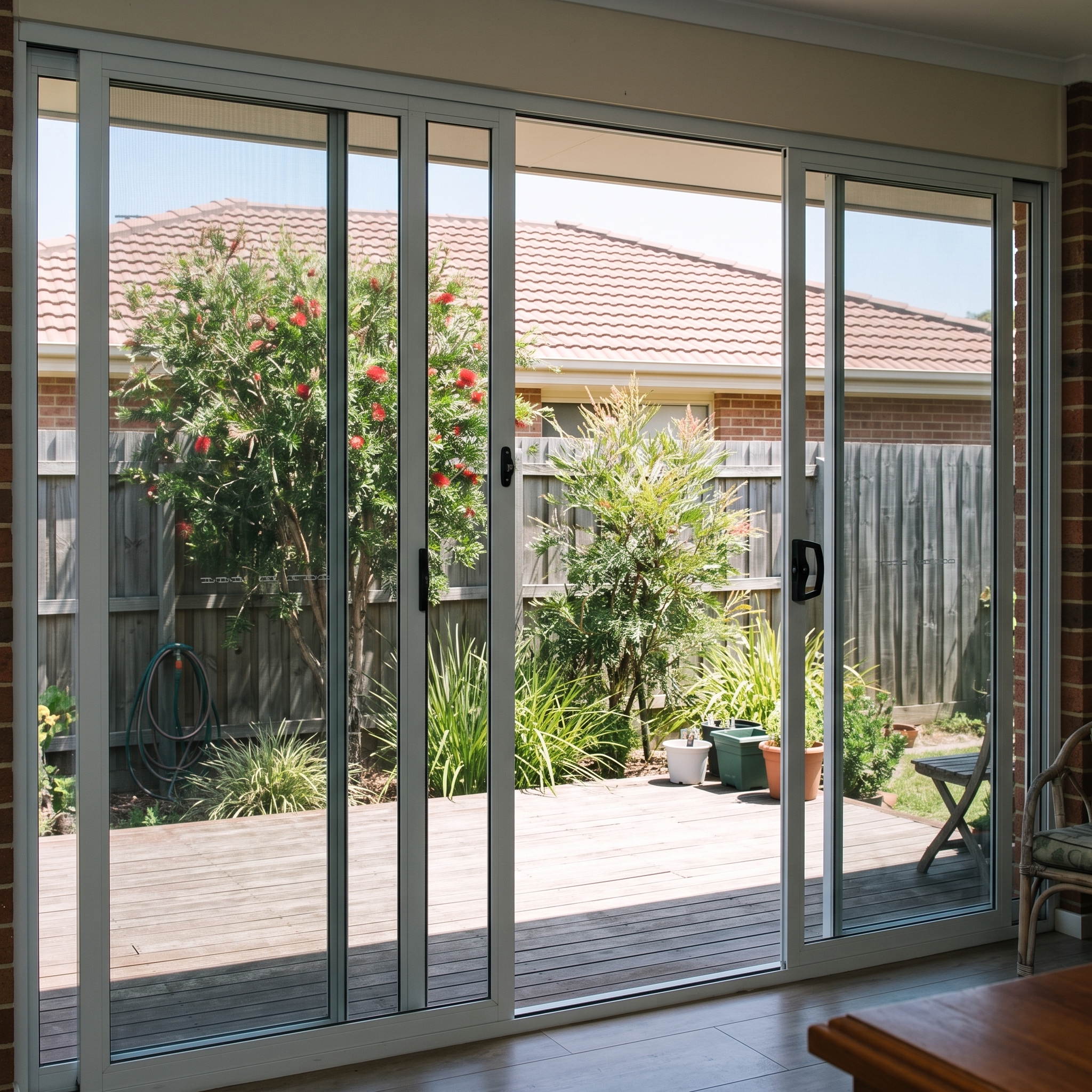
This is the whole decision and it is worth getting right at quote stage rather than after. Standard fibreglass at 18x16 strands per inch stops flies and mosquitoes while giving up almost nothing on airflow, at 79.8% open area. Sandfly grade tightens to 20x20 on a thicker 0.3mm yarn and drops to 45% open, which is the trade you make for stopping midges. Tell us what is actually getting in and we will match the weave to it.
PawScreen is a PVC-coated polyester on a 0.63mm yarn at 360g/m2, tested under ISO13934-1 at 860 newtons per inch on the warp, so a dog can lean on the door without going through it. MegaMesh is 316 marine-grade stainless at 0.17mm wire and 79% open area, salt spray tested to 2,000 hours and bushfire rated to BAL-40 under AS3959. It is also the one mesh here approved for use in KidScreen fall-prevention screens under AS5203.
No mesh on this page is tested to AS5041, the forced-entry standard, and none of it claims to be. If keeping people out is the point, you want a security screen or a security door, and we build those too. From a few metres away the two look almost identical, which is exactly why it is worth being clear about which one you are buying.
Give us your opening sizes and finish preferences and we’ll come back with a tailored quote — usually within two business days.
— No obligation, enquiry only
— 200+ powder-coat colours
— Supply-only or supply & install
No. Flyscreens are insect screens, and none of the mesh on this page is tested to AS5041, the forced-entry standard. If keeping people out is the point, you want a security screen or a security door, and we make those too. From a few metres away the two look almost identical, which is exactly why it is worth being clear about which one you are buying.
PawScreen, a PVC-coated polyester built for claws rather than insects. The heavy grade uses a 0.63mm yarn at 360g/m2 and tests at 860 newtons per inch on the warp, so a dog can lean on the door without going through it. If the pet is a cat rather than a labrador, the lighter grade is usually enough and costs less. Aluscreen Plus, a heavy gauge 0.4mm aluminium mesh, is the other option where the damage is scratching rather than weight.
Warm water, a soft brush and a mild detergent, then rinse properly so no detergent dries on the mesh. Stay away from abrasive and heavy duty cleaners: they scratch coatings and on fibreglass they will fray the weave. If the screen lifts out easily, lay it flat on the lawn and hose it. Once or twice a year is plenty inland, more often near the coast.
MegaMesh, if the budget allows. It is 316 marine grade and salt spray tested to 2,000 hours, and it is the only mesh here with a corrosion figure attached to it at all. Fibreglass is a reasonable second since it cannot corrode, though UV and salt together will still age it. What you do not want on a beachfront house is plain aluminium mesh.
Yes, and you will feel the difference. Sandfly grade goes to 20x20 strands per inch on a thicker 0.3mm yarn, which drops open area to 45%, roughly half the airflow of a standard screen. Coastal and tropical houses usually decide that is worth it. Inland, most people do not need it.
If the frame is sound and only the mesh has gone, yes, and it costs a fraction of a new unit. Sagging, a hole the cat made, or fibreglass gone chalky and brittle after a decade in the sun are all rescreening jobs. Send a photo. What matters is whether the spline channel is intact and the corners are still square. If either has gone, replacement is the better spend and we will say so.
Yes, from the beaches down through the southern corridor: Edmonton, Bentley Park, Mount Sheridan and Gordonvale are all covered. Tell us which insect is the problem where you are, because the right mesh on the beaches is not the right mesh inland.